There are places you travel to, and there are landscapes that subtly change you. One such event was travelling to the enormous and nearly otherworldly Great Rann of Kutch in Gujarat. The Rann initially appears to be an unending white ocean that has been frozen in time. The horizon blurs the line between the sky and the ground as it extends indefinitely. Only a vast sea of glistening salt beneath a vast sky. This area was formerly a part of the Arabian Sea. The landscape was gradually changed by tectonic movements, which pushed out ocean and reshaped river systems, leaving behind a shallow basin.
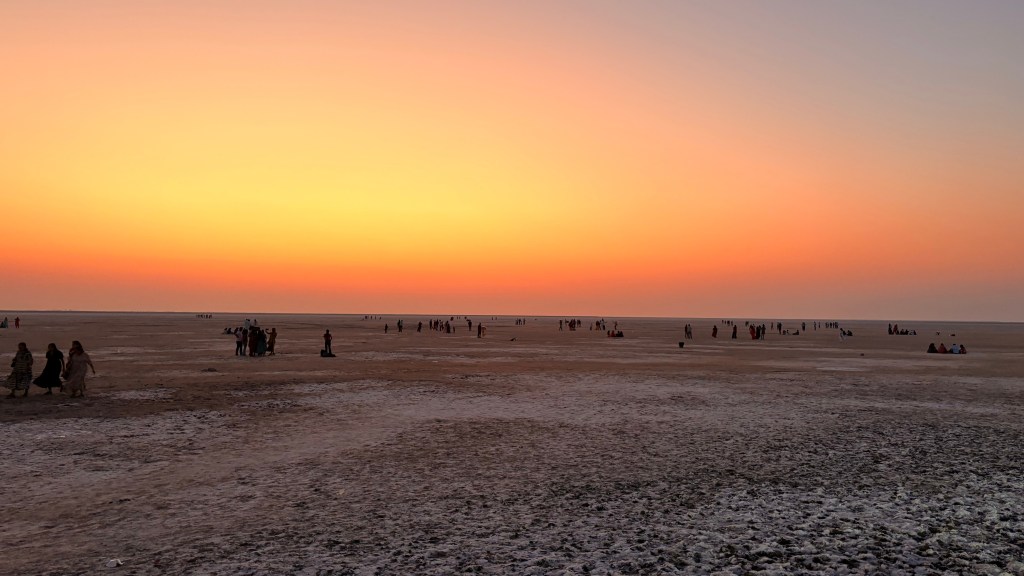
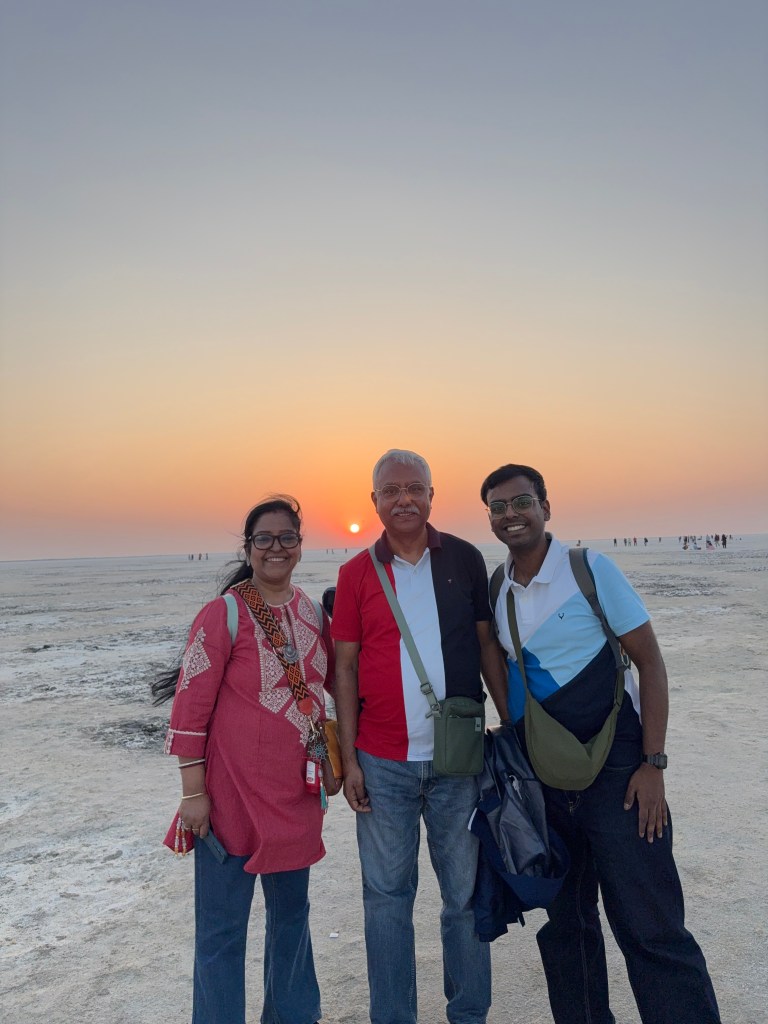
The Rann is flooded by rain and saltwater during the monsoon season each year, turning it into a marshy wetland. Thick layers of crystallised salt are left behind when summertime temperatures rise and the water gradually evaporates. Year after year, this cycle of flooding and evaporation produced the recognisable white crust that now characterises the Rann.
But the Rann looked a little different this year. The full drying process was postponed by heavy late rainfall. Moisture stayed beneath the salt crust in numerous places, making it wet and removing the brilliant white lustre.
However, this did not lessen the beauty; rather, it added a perspective -while nature produces wonders over ages, human presence can change them in a few of seasons.
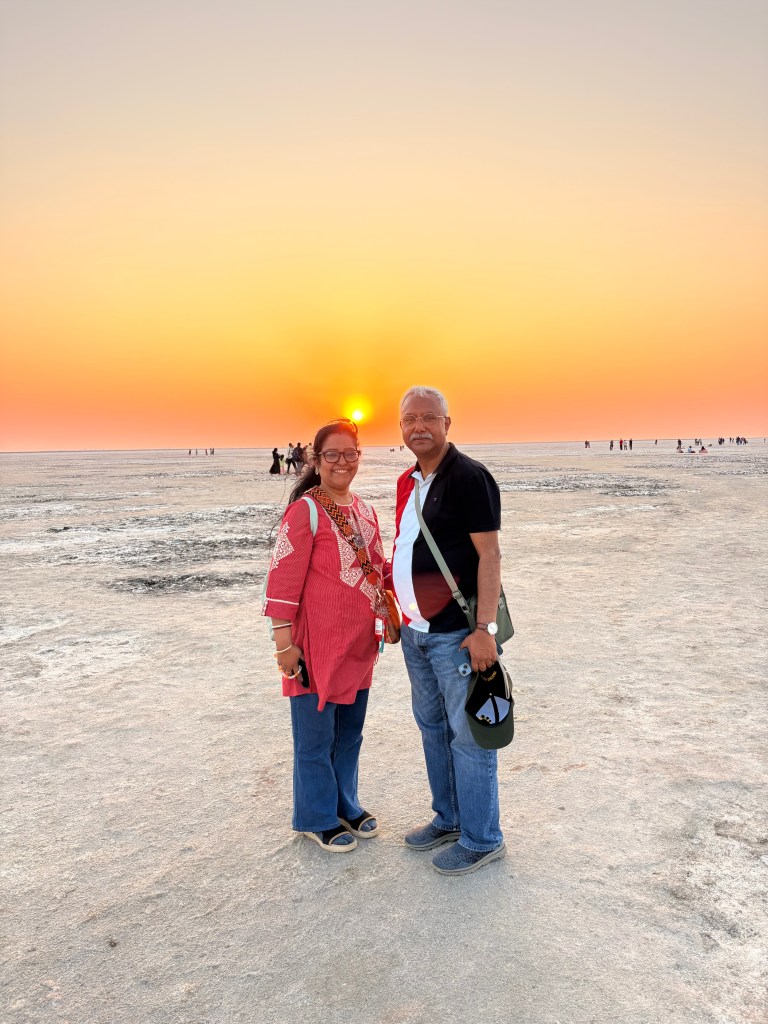
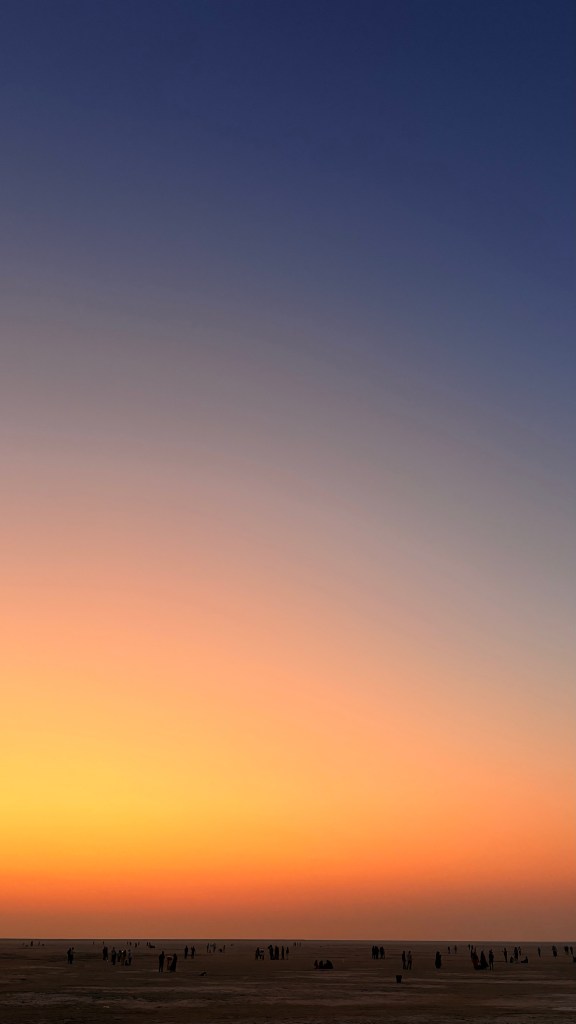
Nature undergoes a mystical metamorphosis when night falls – the sun sets and the salt flats transform into a massive reflective canvas. Amber turns into pink when gold melts, then deep scarlet. The horizon seems to be illuminated from within. Time slows down during those brief moments, and instead of just seeing the sunset, one watches a ritual of light. It has a hypnotic, spiritual sense to it.
Not far from Rann is a road known as “Road to Heaven”. This roughly 30-kilometer section of road was built to provide access to Dholavira, the UNESCO World Heritage Site and ancient Harappan settlement. The roadway is a portion of the Dhordo village route that leads to the renowned White Rann, which is close to the Great Rann of Kutch and what makes this road extraordinary is not just its destination — it is the illusion it creates.
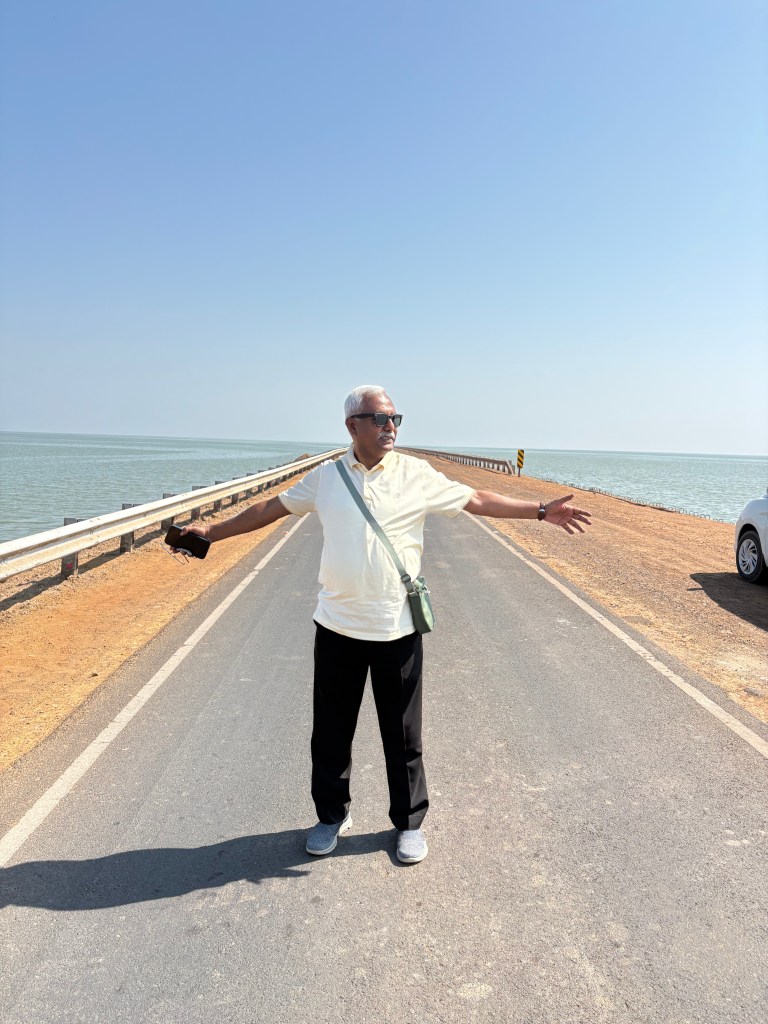
A breathtaking visual effect is created by the area’s flat terrain, wide, continuous skies, and strong sunshine reflecting off the salt. On some days, the highway seems to grow upward at the horizon, especially in the bright afternoon light. A strong mirage is produced as the distant end shimmers and blurs. The road appears to ascend directly into the sky and feels like you are driving into the clouds as you approach it.
More than only Dhordo and Dholavira are symbolically connected by the Road to Heaven. It links the past and present, from ancient civilisation to contemporary infrastructure. It links the land and the sky. From illusion to reality.
As you drive down that endless stretch and observe the road disappear into the distance, you feel both small and profoundly a part of something bigger. This year’s slightly flawed whiteness made the experience much more significant reminding that beauty is dynamic rather than stagnant. That nature is both sensitive and resilient. The Great Rann of Kutch in Gujarat seems like a location that would linger with you and alter your perspective. It’s this vast, perpetually white region that resembles a frozen sea or something.
 Musing of a travelling Bong
Leave a comment